
10 min read
The Complete Guide to Hyperpigmentation: Causes, Types, and Treatments
The Complete Guide to Hyperpigmentation: Causes, Types, and Treatments
If you've noticed dark patches, uneven skin tone, or spots that linger long after a breakout has healed, you're dealing with hyperpigmentation — one of the most common skin concerns people search for answers about. The good news: it's rarely dangerous, and in most cases it's treatable. This guide breaks down exactly what hyperpigmentation is, why it happens, and which treatments actually work.
What Is Hyperpigmentation?
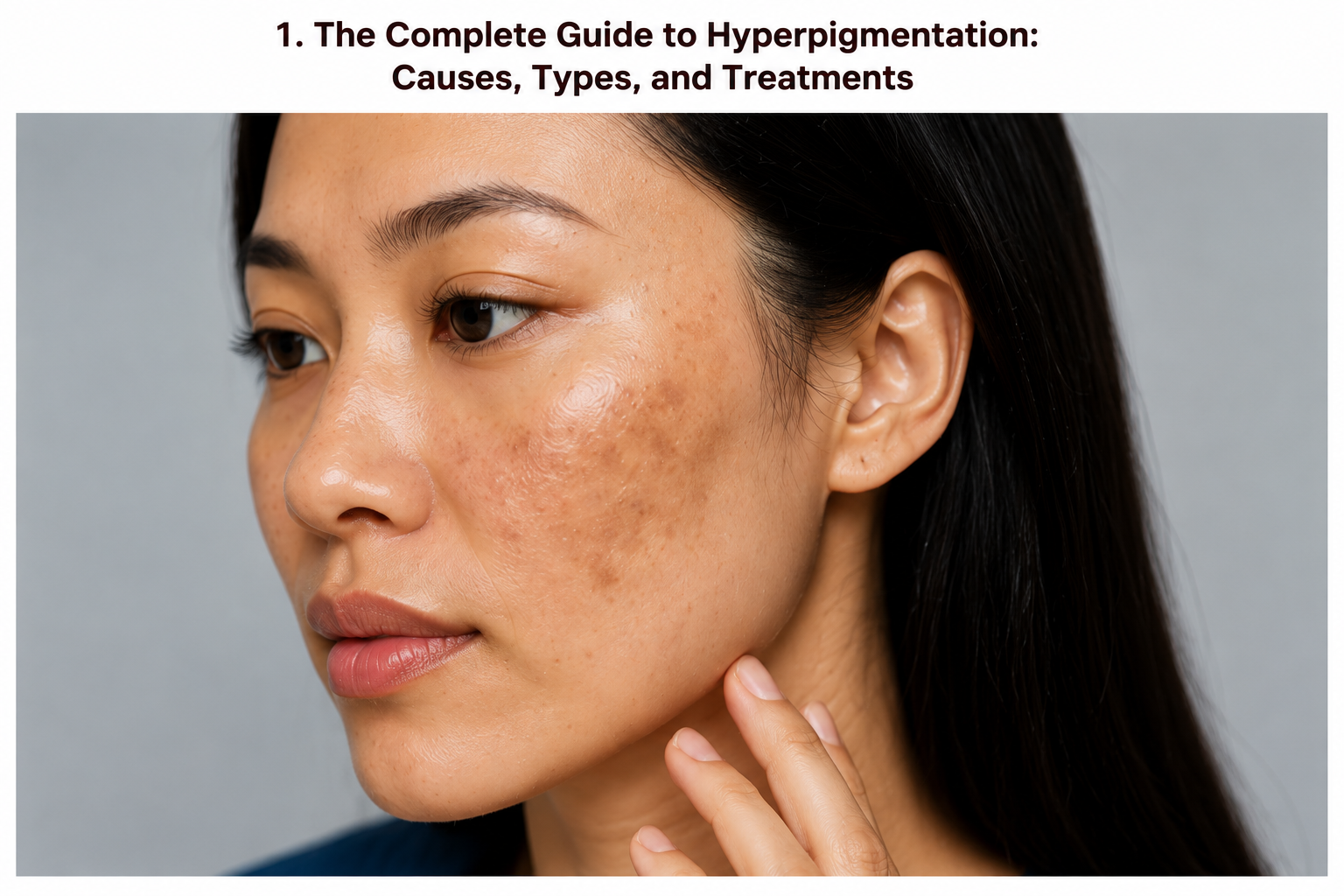
Hyperpigmentation is a general term for patches of skin that become darker than the surrounding area. It happens when your skin produces excess melanin — the pigment responsible for your natural skin color. Melanin is made by cells called melanocytes, and when they're triggered by inflammation, sun exposure, hormones, or injury, they can go into overdrive in specific areas, leaving behind dark patches, spots, or a generally uneven skin tone.
Hyperpigmentation isn't a single condition — it's an umbrella term that covers several different types of skin discoloration, each with its own causes and treatment approach. That distinction matters, because the right hyperpigmentation treatment depends heavily on which type you're dealing with.
Types of Hyperpigmentation
Post-inflammatory hyperpigmentation (PIH). Dark marks left behind after acne, eczema, a cut, or any injury to the skin. This is one of the most common forms, especially in people with medium to deep skin tones.
Melasma. Larger, symmetrical patches of discoloration, often on the cheeks, forehead, and upper lip. Melasma is strongly linked to hormones — it's common during pregnancy, with birth control use, and with sun exposure. It tends to be more stubborn than other types.
Sun spots (age spots / solar lentigines). Small, flat, darkened areas caused by years of cumulative UV exposure. These typically show up on the face, hands, and shoulders as we age.
Freckles. A genetic form of pigmentation that darkens with sun exposure — usually harmless and more of a cosmetic preference than a concern.
Common Causes of Hyperpigmentation
UV exposure: Sunlight is the single biggest trigger for melanin production and the biggest reason existing dark spots get darker.
Inflammation: Acne, eczema, psoriasis, and skin injuries can all trigger PIH as the skin heals.
Hormonal changes: Pregnancy, birth control, and hormone therapy can trigger melasma.
Genetics: Some people are simply more prone to pigmentation due to naturally more reactive melanocytes.
Certain medications: Some antibiotics, chemotherapy drugs, and anti-seizure medications can cause drug-induced pigmentation.
Skin irritation: Harsh scrubbing, waxing, or aggressive treatments can trigger dark patches on skin, particularly in darker skin tones.
Professional Treatments for Hyperpigmentation
For deeper or more stubborn discoloration, in-office treatments can speed up results:
Chemical peels: Use acids to exfoliate the top layers of skin and encourage even pigment turnover. Often used for sun spots and mild melasma.
Microneedling: Creates controlled micro-injuries that stimulate collagen and can be combined with brightening serums for enhanced absorption.
Laser treatment: Targets pigment directly, though it needs to be approached carefully in darker skin tones, since certain lasers can worsen PIH if not properly calibrated.
Prescription-strength hydroquinone or tretinoin: A dermatologist can prescribe stronger concentrations than what's available over the counter.
Anyone with a deeper skin tone should seek a dermatologist experienced in skincare for dark skin, since some treatments carry a higher risk of triggering more pigmentation if used incorrectly.
At-Home Treatments
Consistent daily care is often what makes the biggest long-term difference:
Vitamin C serum: A well-studied antioxidant that helps fade discoloration and protects against future UV-triggered pigmentation.
Niacinamide serum: Calms inflammation and helps regulate melanin transfer to skin cells.
Tranexamic acid serum: Increasingly recommended for melasma specifically.
Kojic acid soap or serum: A gentler brightening option derived from fungi, often used to fade dark patches.
Retinol cream: Speeds up cell turnover, helping pigmented cells shed faster.
Exfoliating acids (AHAs/BHAs): Support even skin tone by removing dulling, pigmented surface cells.
Prevention
The single most important step in any hyperpigmentation treatment plan is daily sunscreen SPF 50, applied every day regardless of weather or how much time you spend outdoors. UV exposure is the number one reason spots darken and new ones form. Beyond sunscreen:
Avoid picking at acne or scabs, which increases the risk of PIH.
Introduce active ingredients gradually to avoid irritation-triggered pigmentation.
Wear a wide-brimmed hat and seek shade during peak UV hours.
Be gentle — over-exfoliating or aggressive treatments can make pigmentation worse, not better.
Protective Sun Gear
Sunscreen is essential, but it's not the only layer of protection. A wide-brim hat that shades the face, neck, and shoulders adds a physical barrier against UV, helping prevent dark spots from deepening while your skin heals.
Pairing daily SPF with protective headwear gives your skin the best chance to fade existing marks and avoid new ones.
Shop The Pink HaloFrequently Asked Questions
Is hyperpigmentation permanent? Not usually. Most forms fade over time with consistent treatment and sun protection, though melasma can be more persistent and may require ongoing management.
How long does it take to fade dark spots? Mild PIH can fade in a few weeks to a few months. Deeper pigmentation or melasma may take six months to a year of consistent treatment.
Can hyperpigmentation come back after treatment? Yes, especially melasma and sun-triggered spots, if sun protection isn't maintained consistently.
Does hyperpigmentation affect all skin tones equally? No. Deeper skin tones tend to be more prone to visible post-inflammatory hyperpigmentation and need extra care when choosing treatments like lasers or peels to avoid worsening discoloration.
What's the difference between hyperpigmentation and melasma? Melasma is a specific type of hyperpigmentation driven primarily by hormones and sun exposure, usually appearing in larger, symmetrical patches, while hyperpigmentation more broadly includes any form of skin discoloration.