
5 min read
Dark Spots vs. Acne Scars: What's the Difference?
The Most Common Mix-Up in Skincare
It's one of the most common mix-ups in skincare — and an important one, because a product that fades a dark spot in eight weeks will do almost nothing for a true scar, no matter how long you use it. Before you invest in a routine or a treatment, it helps to know exactly what you're looking at.
Dark Spots (Hyperpigmentation)
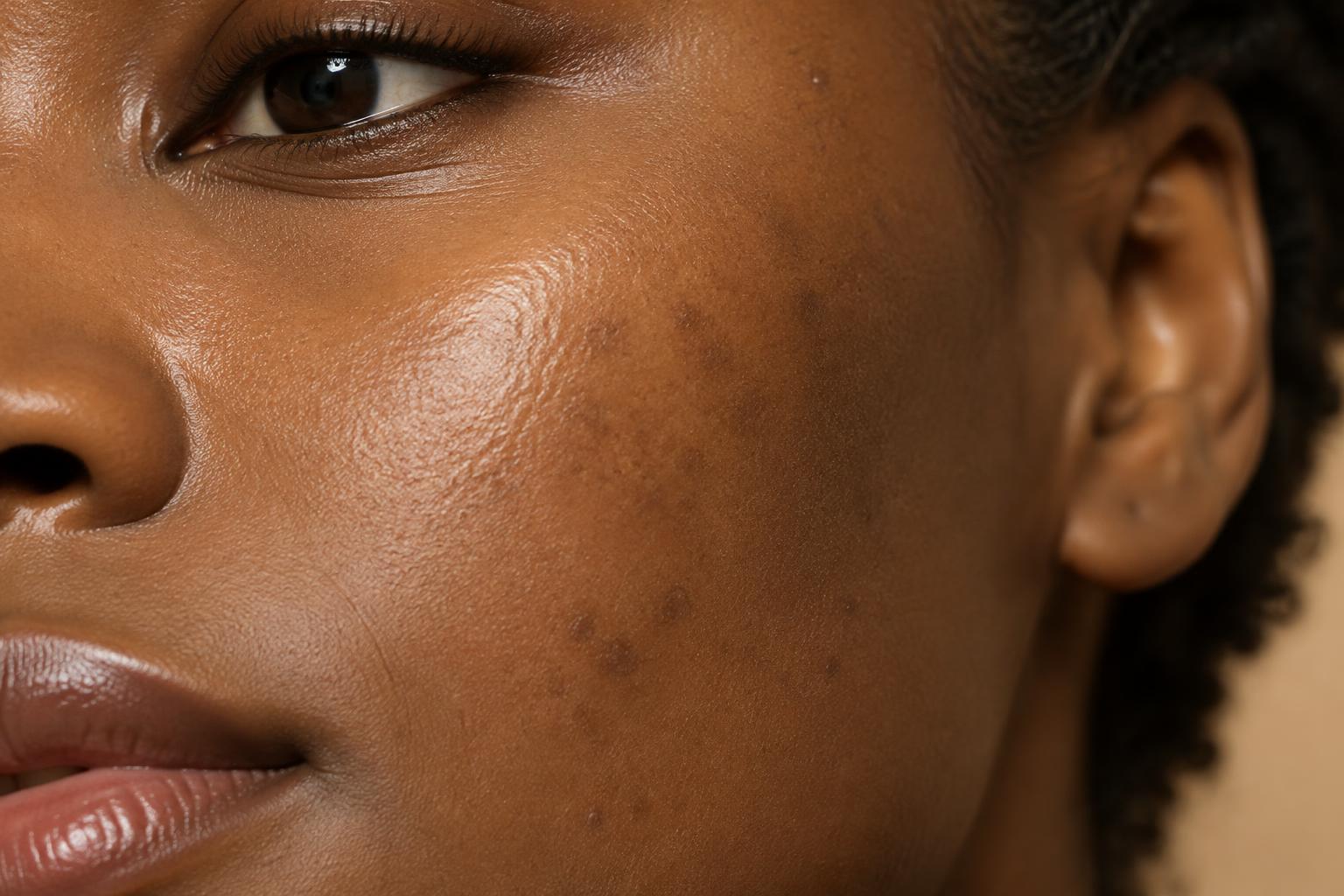
Dark spots — also called post-inflammatory hyperpigmentation (PIH) — are flat discolorations left behind after a breakout, bite, burn, or other skin injury heals. Key features:
They're flat to the touch, with no texture change, just color. The color ranges from pink or red (in lighter skin tones) to brown, purple, or black (in medium to deep skin tones). They fade on their own over time — typically 3–24 months depending on depth, skin tone, and sun exposure, faster with active treatment. And they respond to topical ingredients like vitamin C, niacinamide, azelaic acid, and retinoids, plus consistent sun protection.
Acne Scars
True acne scarring involves actual structural damage to the skin — collagen has been destroyed or overproduced during healing, changing the skin's texture, not just its color. Key features:
They're textured — you can usually feel a difference under your fingertip. There are two main types: atrophic (indented) scars — icepick, boxcar, or rolling scars, caused by collagen loss during healing — and hypertrophic or keloid scars, raised, thickened tissue from collagen overproduction. Texture-based scarring does not fade or resolve on its own; it's permanent without intervention. It typically requires procedural treatment — microneedling, laser resurfacing, subcision, chemical peels, or filler — usually performed by a dermatologist.
The Two-Second Test
Run a clean fingertip lightly over the mark with your eyes closed. Smooth, with no dip or bump? It's a dark spot (pigmentation). An indentation, raised bump, or rough texture? It's a scar.
It's also entirely possible to have both at the same site — a scarred area that also darkens with sun exposure — which is why some spots seem to respond to fading products at first, then plateau at a residual mark that never quite disappears.
Why This Distinction Changes Your Routine
If you're treating pigmentation with scar-focused expectations, you'll assume your products “aren't working” long before they've had a fair chance — fading takes months, not weeks. If you're treating scarring with a pigmentation routine, you may see some tone improvement but will likely be disappointed by the lack of change in texture, because vitamin C and niacinamide were never built to rebuild collagen structure.
Once you know which one you're dealing with, you can set the right timeline and pick the right tools. For hyperpigmentation, see our full ingredient breakdown in Best Ingredients for Hyperpigmentation That Dermatologists Recommend; for post-acne pigmentation specifically, see Post-Inflammatory Hyperpigmentation (PIH): How to Fade Acne Marks.
And whichever one you're dealing with, daily sun protection matters — UV exposure darkens pigmentation and can make the redness or discoloration around scars more noticeable and slower to fade.
Shop The Pink Halo