
8 min read
How to Get Rid of Dark Spots Naturally and Fast
How to Get Rid of Dark Spots Naturally and Fast
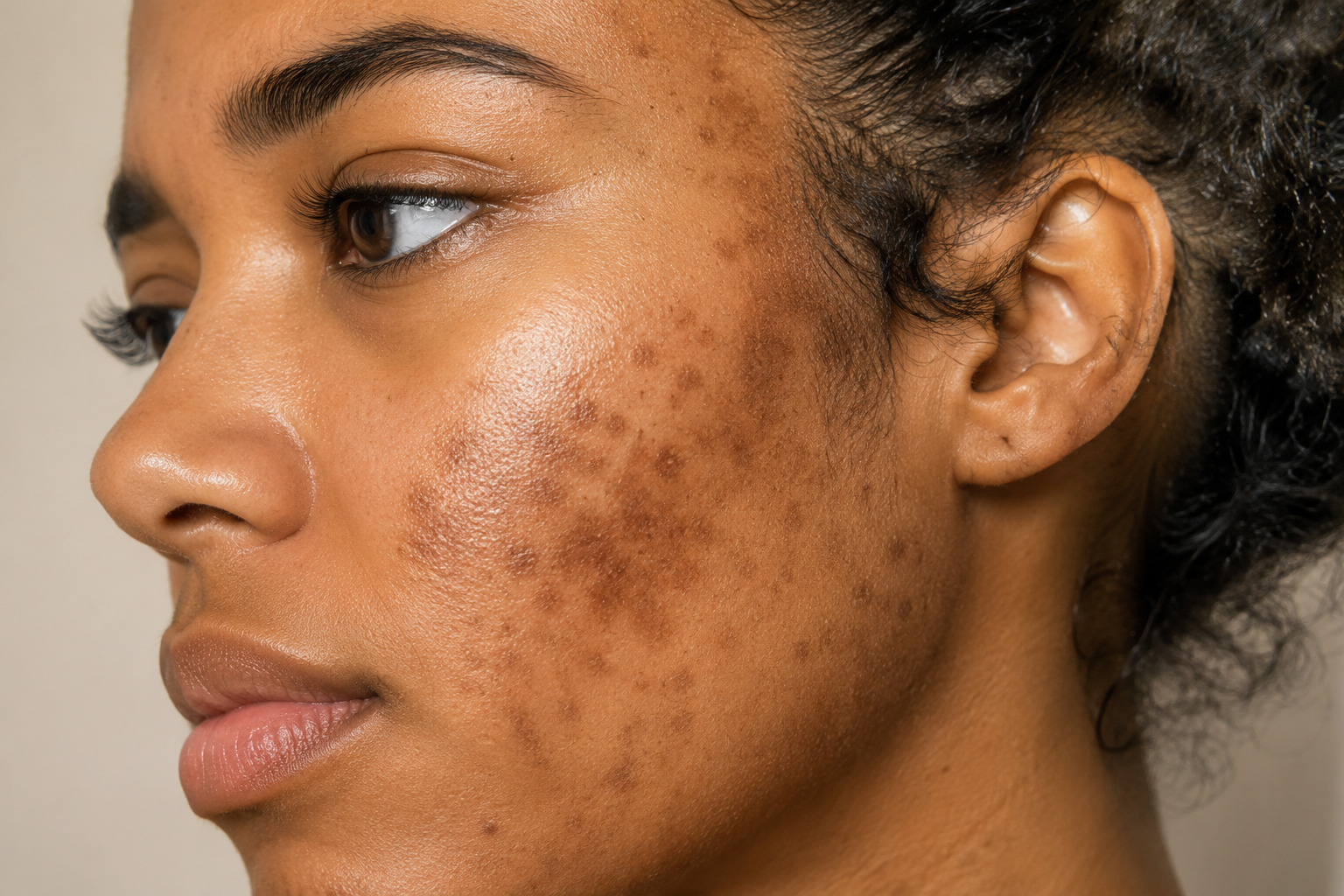
Dark spots are stubborn, but they're not permanent. Whether you're dealing with sun spots, acne marks, or general skin discoloration, the fastest path to clearer skin is a combination of proven ingredients, consistency, and daily sun protection. Here's what actually works — and what's just marketing.
Why Dark Spots Happen
Dark spots form when your skin produces excess melanin in response to a trigger — usually UV exposure, inflammation from acne or injury, or hormonal changes. Once melanin clusters in one area, it can take weeks or months to clear because skin cell turnover is slow. That's why "fast" fixes are relative — real results take consistent effort, not overnight miracles.
Ingredients That Actually Work
If you want to fade dark spots, look for products built around these dermatologist-backed ingredients:
Vitamin C for hyperpigmentation. A powerful antioxidant that inhibits excess melanin production while also protecting skin from the free radical damage that makes dark spots worse. Look for stabilized formulas (L-ascorbic acid, sodium ascorbyl phosphate) in the 10–20% range.
Niacinamide. Reduces inflammation and blocks the transfer of pigment to skin cells. It's gentle enough for daily use and pairs well with almost every other active.
Kojic acid. Derived from fungi, kojic acid interrupts the enzyme responsible for melanin production. It's commonly found in serums and kojic acid soap, and works well for surface-level discoloration.
Alpha arbutin. A gentler, slower-acting alternative to hydroquinone that inhibits pigment production without the irritation risk. A good option for sensitive skin.
Tranexamic acid. Originally used in medicine to reduce bleeding, it's now a go-to ingredient for melasma and stubborn dark spots because it targets pigment at a different pathway than vitamin C or niacinamide.
Azelaic acid. Naturally derived, anti-inflammatory, and effective for both acne and the dark marks it leaves behind — a solid pick if breakouts are part of your discoloration story.
Exfoliating acids (glycolic, lactic, salicylic). Support faster cell turnover so pigmented cells shed instead of lingering on the surface.
Daily Skincare Routine to Fade Dark Spots
Morning: gentle cleanser, vitamin C serum, moisturizer, sunscreen SPF 50 (non-negotiable).
Evening: gentle cleanser, treatment serum (niacinamide, alpha arbutin, or tranexamic acid — alternate or layer based on tolerance), retinol or exfoliating acid (2–3x per week, not nightly at first), moisturizer.
Introduce one new active at a time, spaced a week or two apart, so you can tell what's working and avoid irritation, which can actually trigger more pigmentation.
Ingredients to Avoid
Unregulated high-strength hydroquinone from unverified sources — effective, but should be used under guidance and not long-term without a break.
Harsh physical scrubs — micro-tears in the skin can trigger new post-inflammatory hyperpigmentation.
DIY lemon juice or baking soda treatments — these disrupt your skin's pH and often cause irritation or burns that make discoloration worse.
Too many actives at once — combining retinol, strong acids, and vitamin C all in one routine without building tolerance is a common cause of setbacks.
How Long Results Take
Mild, surface-level dark spots: 4–8 weeks of consistent use.
Moderate post-acne marks: 3–6 months.
Melasma or deep-set pigmentation: 6–12 months, often with professional treatment layered in.
Skin cell turnover naturally takes about 28 days in younger skin and slows with age, which is why patience — paired with daily sunscreen — is what actually separates people who see results from people who don't.
Protective Sun Gear
Sunscreen is essential, but it's not the only layer of protection. A wide-brim hat that shades the face, neck, and shoulders adds a physical barrier against UV, helping prevent dark spots from deepening while your skin heals.
Pairing daily SPF with protective headwear gives your skin the best chance to fade existing marks and avoid new ones.
Shop The Pink Halo